
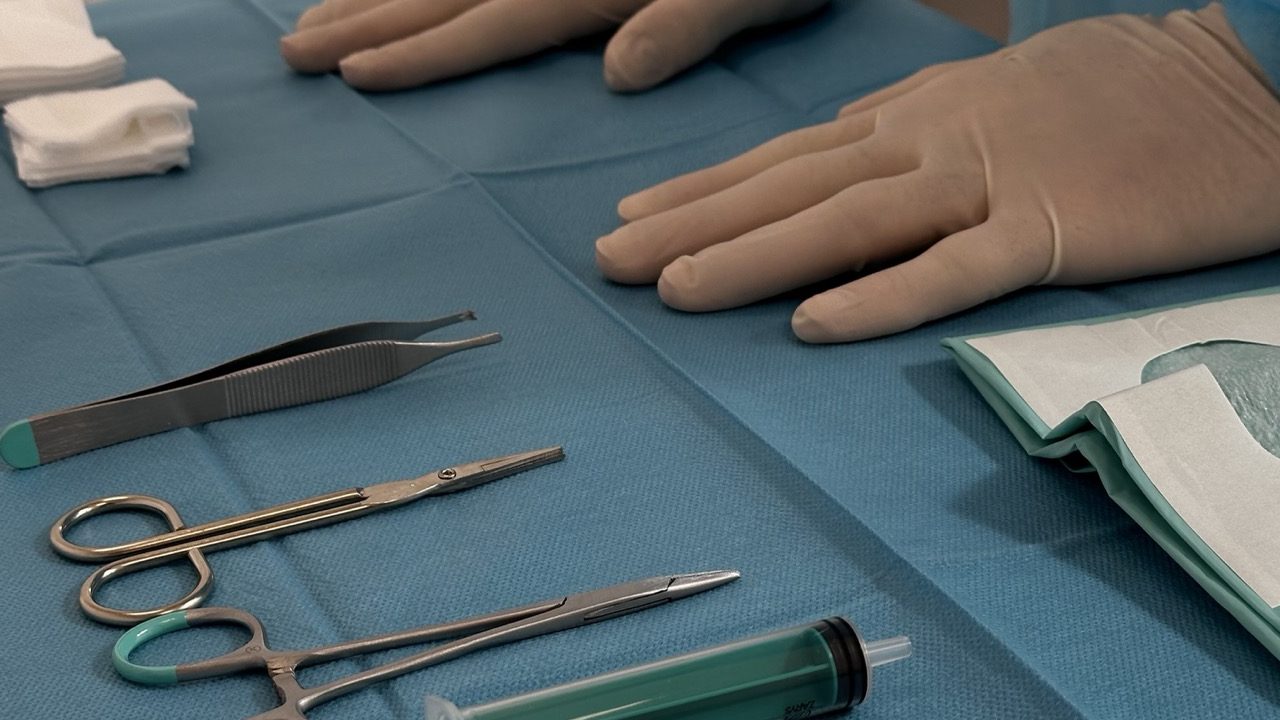
Primary wound management is a surgical procedure involving wound debridement: the injury is carefully assessed, non-viable or contaminated tissue is removed, the wound is cleaned and sutured. The aim of the procedure is to reduce the risk of infection, create optimal conditions for wound healing and ensure the best possible functional and aesthetic outcome. Timely primary wound management helps to prevent complications, speeds up healing and minimises scarring. The best results are achieved when the procedure is carried out within the first few hours after the injury.
When is primary wound management required?
- For lacerations;
- For avulsion wounds;
- For puncture wounds;
- For bite wounds;
- Contaminated wounds;
- Deep wounds affecting the subcutaneous tissue or other tissues;
- Bleeding wounds requiring surgical treatment.
Detailed information on primary wound management
What happens before the procedure?
Before the procedure, the doctor assesses the nature of the wound, the time since the injury, the degree of contamination and the patient’s general state of health. Where necessary, additional measures are taken to help reduce the risk of complications:
- A medical history is taken and any allergies are assessed;
- Antibiotics are prescribed if necessary;
- The course of the procedure and post-treatment wound care are discussed.
What happens during the procedure?
The procedure is usually carried out under local anaesthesia. First, the wound is thoroughly cleaned, foreign bodies and any dead or contaminated tissue are removed, and any bleeding is stopped. The edges of the wound are then brought together and sutured. A sterile dressing is applied at the end of the procedure.
What happens after the procedure?
Most patients can go home on the same day. To ensure smooth healing, it is recommended that you:
- Keep the wound clean and dry;
- Change the dressings regularly as advised by your doctor;
- Avoid straining the wound and strenuous physical activity;
- Take any prescribed medication, if applicable;
- Attend a follow-up appointment for the removal of stitches.
What are the possible complications?
- Bleeding;
- Wound infection;
- Delayed healing;
- Wound edges separating;
- Scarring;
- Temporary or permanent loss of sensation around the wound.
How long does healing take?
Superficial wounds usually heal within 1–2 weeks, but the final scar may take 12–18 months to form. The duration of healing depends on the size and location of the wound, the patient’s state of health and proper wound care.
When should I be concerned and see a doctor?
- The pain is getting worse;
- Redness or severe swelling develops;
- There is a purulent discharge from the wound;
- You have a fever;
- Bleeding starts;
- The stitches come out or the wound reopens.
Primary wound care and closure
70-110 €